How Political Power Really Works
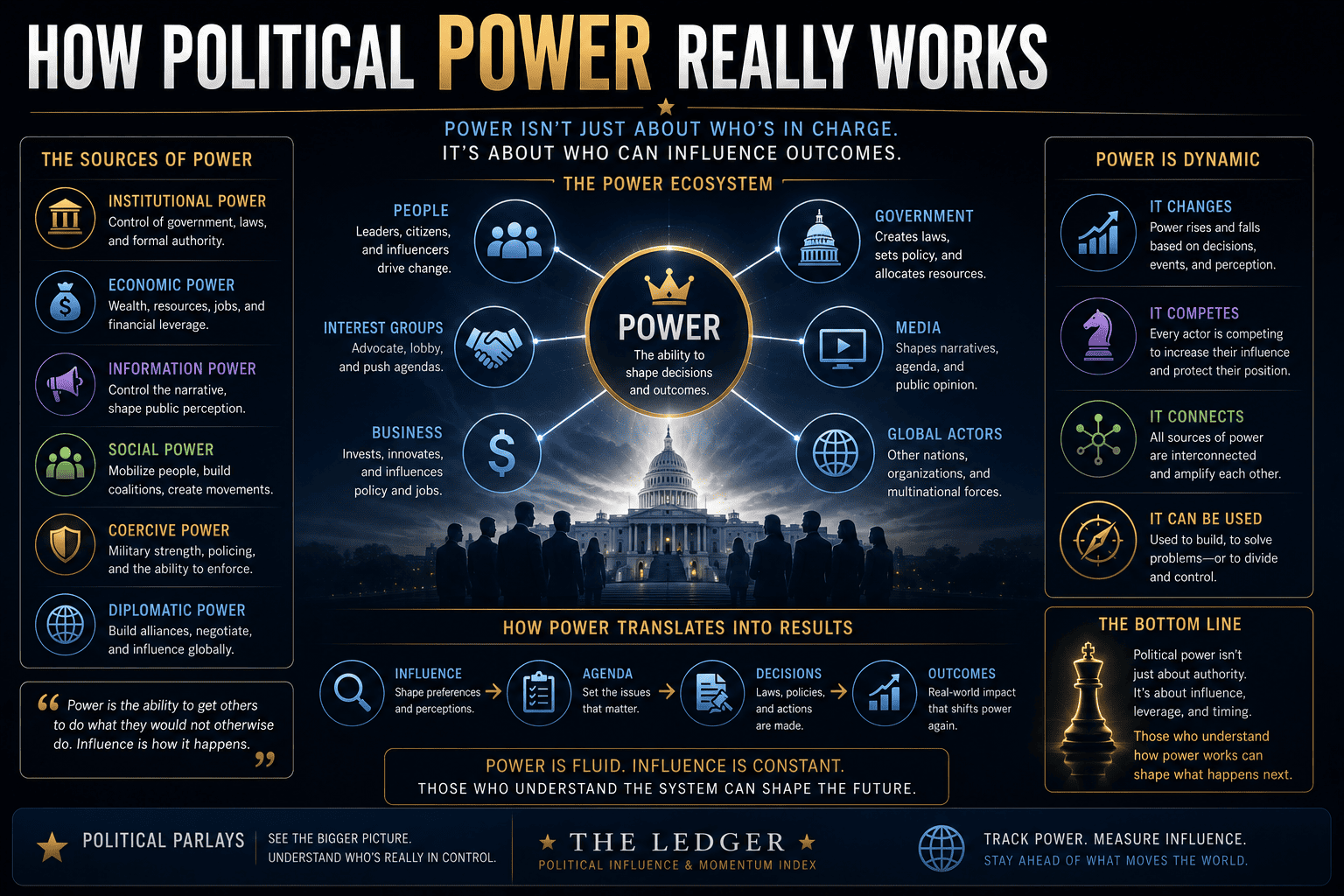
How Political Power Really Works
The Forces That Shape Governments, Elections, and Global Influence
Politics is often viewed through the lens of elections, political parties, and campaign rhetoric. While these are important components of the political process, they represent only a fraction of how influence is gained, exercised, and maintained. The world’s political landscape is constantly evolving as governments, elected officials, corporations, institutions, advocacy groups, and global organizations compete to shape policy, public opinion, economic priorities, and international affairs.
Every day, thousands of decisions are made that influence the direction of nations. Legislatures debate new laws, executives issue policy directives, courts interpret constitutions, diplomats negotiate agreements, corporations respond to regulation, and citizens express their views through voting, activism, and public discourse. Each of these actions has the potential to shift the balance of influence.
The challenge is that news headlines often focus on isolated events. One day the story is a presidential speech, the next day it is a Supreme Court decision or an international summit. While these developments are important individually, understanding politics requires seeing how they connect together and how they alter the relative influence of the people, institutions, countries, and issues involved.
Political power is not static. It rises and falls as circumstances change. A successful policy initiative may strengthen a leader’s position, while an unpopular decision may reduce public support. A diplomatic breakthrough can elevate a nation’s global standing, while economic instability or geopolitical conflict can weaken it. Influence is constantly being earned, challenged, and redistributed.
What Is Political Power?
Political power is the ability to influence decisions, shape public policy, allocate resources, or affect the behavior of governments, institutions, businesses, and individuals. While elected officials often possess formal authority, political influence extends far beyond government office.
Presidents, legislators, governors, judges, business executives, advocacy organizations, media outlets, international institutions, and even emerging technologies can all shape political outcomes. Some exercise authority directly through laws and executive action, while others influence decisions indirectly through public opinion, economic leverage, or strategic partnerships.
True political influence comes from the ability to change outcomes—not simply from holding a title.
Formal Authority vs. Real Influence
Holding office does not automatically make someone the most influential actor in politics. Formal authority provides legal powers and constitutional responsibilities, but real influence often depends on additional factors.
Public trust, legislative support, relationships with other leaders, media attention, fundraising capabilities, diplomatic credibility, and economic conditions all affect how effectively someone can exercise authority.
Likewise, individuals or organizations without elected positions can have tremendous influence by shaping public opinion, driving technological innovation, funding political initiatives, or influencing economic activity.
Political influence is often earned through results rather than titles.
Elections Are Only One Chapter
Election campaigns attract enormous public attention, but governing begins after the votes are counted.
Once elected, leaders must build coalitions, negotiate legislation, respond to crises, manage budgets, conduct diplomacy, appoint officials, and implement policy. Their influence continues to evolve throughout their time in office based on the decisions they make and the outcomes those decisions produce.
Political momentum can change significantly between elections as governments respond to changing economic conditions, national security concerns, judicial rulings, technological innovation, or international events.
Understanding politics requires following what happens after Election Day.
Media and Public Perception
Information plays a central role in modern politics.
Traditional news organizations, independent journalism, digital platforms, public statements, interviews, debates, and social media all contribute to how political leaders and issues are perceived.
Media coverage influences awareness, shapes public discussion, and often determines which issues receive the greatest attention. Public perception can affect approval ratings, fundraising, legislative priorities, and ultimately the ability of leaders to accomplish their objectives.
Visibility alone does not determine influence, but it can significantly amplify—or diminish—the impact of political events.
Diplomacy and International Relations
Political influence extends well beyond national borders.
Governments regularly negotiate trade agreements, security partnerships, military cooperation, sanctions, climate initiatives, technology standards, and diplomatic relationships that affect billions of people worldwide.
Strong international alliances can increase a country’s influence, while geopolitical conflicts or deteriorating diplomatic relationships may weaken its position.
Global politics is increasingly interconnected, making international cooperation and competition essential components of political influence.
How Legislation Changes Power
Every law has consequences that extend beyond the legislative process.
New legislation can alter industries, reshape financial markets, change healthcare systems, influence education, strengthen national security, encourage innovation, or redefine relationships between governments and citizens.
Major policy initiatives frequently create new political winners and losers as different groups gain or lose influence based on the outcomes of those decisions.
For this reason, legislation is often one of the most important drivers of long-term political change.
Why Momentum Matters
Political influence is dynamic rather than permanent.
Momentum reflects whether an individual, organization, country, or issue is gaining influence or losing it over time.
Election victories, successful negotiations, legislative achievements, improving public approval, economic growth, diplomatic successes, and technological leadership can all contribute to positive momentum.
Conversely, political setbacks, scandals, policy failures, declining public confidence, economic disruption, or international crises may reduce momentum.
Understanding momentum provides valuable context because today’s developments often shape tomorrow’s opportunities.
Measuring Political Influence Through The Ledger
Political Parlays was created around a simple idea: understanding politics requires more than following headlines.
The Ledger is an AI-assisted scoring framework designed to evaluate changes in political influence using a consistent methodology. Rather than focusing on political affiliation or opinion, The Ledger examines measurable developments that affect influence over time.
Each Ledger Score considers six core pillars:
- Influence — The ability to shape decisions, institutions, markets, or public opinion.
- Power — Formal authority, institutional control, economic resources, and capacity to act.
- Momentum — Whether influence is increasing or decreasing based on recent developments.
- Media Presence — Visibility across public discourse and trusted news coverage.
- Global Relations — Diplomatic standing, strategic partnerships, and international influence.
- Sentiment — The overall public and stakeholder response to recent events.
The goal is not simply to report what happened, but to identify who gained influence, who lost momentum, and why those changes matter.
Because politics never stands still, neither does influence. The Ledger is designed to help readers look beyond individual headlines and better understand the shifting balance of power that shapes governments, economies, and the world around us.