Why Political Events Matter
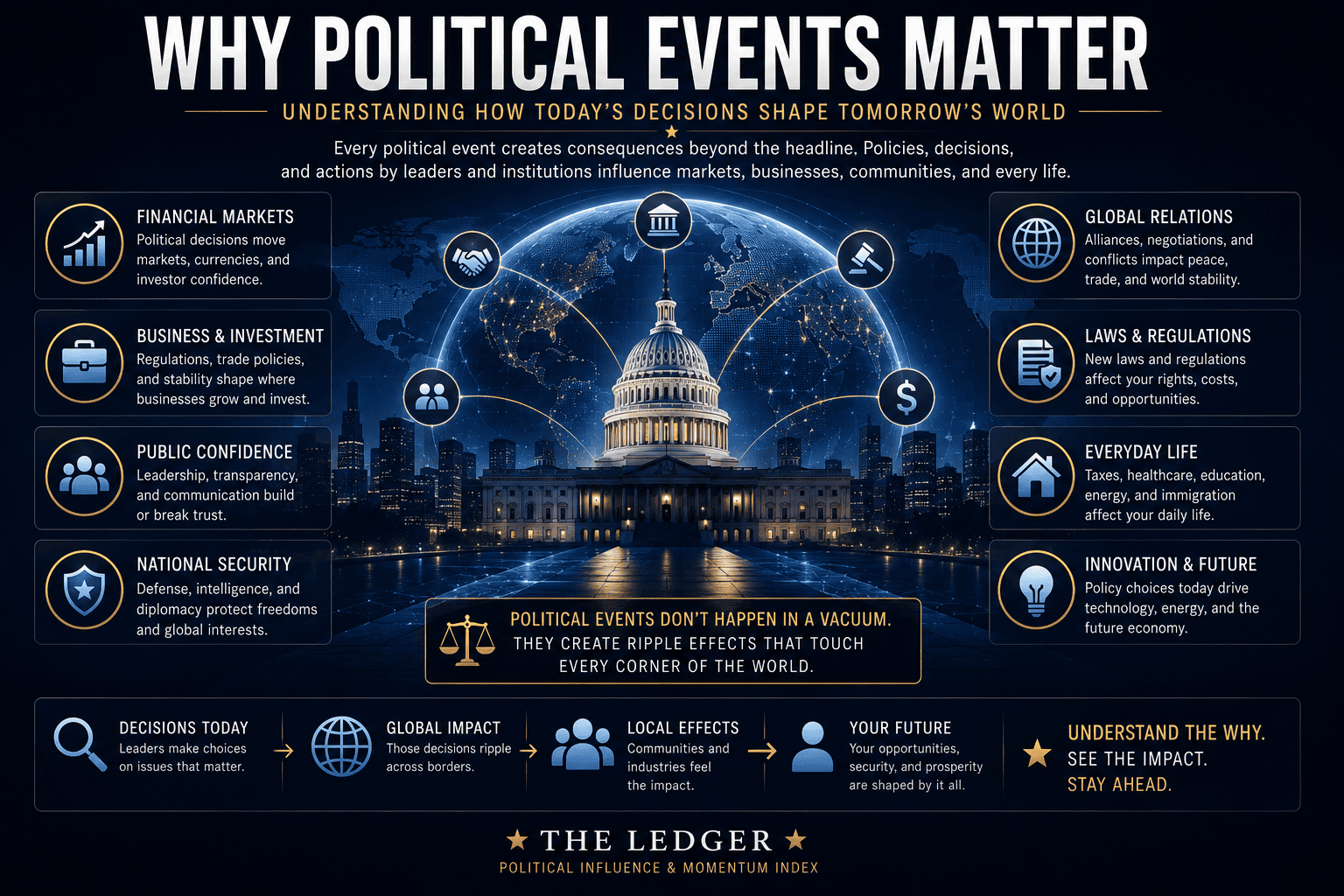
Understanding How Today’s Decisions Shape Tomorrow’s World
Every day, political events unfold across the world. Governments announce new policies, legislatures debate bills, courts issue landmark rulings, elections reshape leadership, diplomats negotiate international agreements, and world leaders respond to emerging crises. While these developments dominate headlines for a brief moment, their true significance often extends far beyond the news cycle.
Political events influence the economy, financial markets, international relations, business investment, technological innovation, national security, public confidence, and the daily lives of billions of people. A single government decision can affect taxes, employment, healthcare, education, trade, immigration, energy prices, corporate strategy, and even global stability.
The challenge is that most people experience politics one headline at a time. It is easy to know what happened, but much harder to understand why it matters, who benefits, who loses influence, and what could happen next.
That is the foundation of Political Parlays.
Rather than simply reporting events, Political Parlays examines how each development changes the balance of influence across governments, political leaders, institutions, countries, companies, and major political issues. Every meaningful event has consequences that ripple through multiple areas of society, often creating new opportunities, challenges, and shifts in global power.
Why Political Decisions Affect Everyone
Politics is often viewed as something that only matters during election season, but government decisions influence nearly every aspect of modern life.
Legislatures determine how public resources are allocated. Governments establish tax policy, regulate industries, negotiate international agreements, fund infrastructure, oversee education, manage healthcare systems, and respond to national emergencies. Central institutions influence monetary policy, while regulatory agencies establish the rules under which businesses and consumers operate.
These decisions affect:
- The cost of living
- Employment opportunities
- Housing markets
- Consumer confidence
- Business investment
- Technological innovation
- National security
- Healthcare access
- Education policy
- Energy production
- International trade
Whether someone follows politics closely or not, political decisions influence the environment in which individuals, businesses, and entire economies operate.
Elections Are the Beginning, Not the End
Election campaigns receive enormous public attention because they determine who will hold public office. Yet elections are only the starting point of governing.
Once elected, leaders face the ongoing responsibility of implementing policy, managing crises, negotiating legislation, building coalitions, overseeing government agencies, appointing officials, conducting diplomacy, and responding to rapidly changing domestic and international conditions.
Political influence continues to evolve long after Election Day. Public approval changes, legislative priorities shift, unexpected events emerge, and governments must continually adapt to new challenges.
Understanding politics means following what happens after the campaign ends.
How Public Policy Shapes Economies
Government policy has profound effects on economic activity.
Tax legislation can encourage or discourage investment. Infrastructure spending may stimulate economic growth. Regulatory changes influence industries ranging from healthcare and energy to finance and technology. Trade agreements affect global supply chains, while immigration policy influences labor markets and long-term economic development.
Businesses regularly adjust hiring, investment, expansion, and pricing decisions based on government policy and political expectations.
For investors, entrepreneurs, and business leaders, understanding political developments is often essential for understanding future economic conditions.
Domestic Politics and Global Geopolitics
Political influence operates at multiple levels.
Domestic politics focuses on elections, legislation, public policy, judicial decisions, and government administration within a country.
Geopolitics examines how nations interact with one another through diplomacy, trade, military alliances, technological competition, international organizations, and strategic partnerships.
Many events affect both simultaneously. A domestic policy decision may alter international trade relationships. Diplomatic negotiations can influence domestic industries. Regional conflicts may reshape energy markets, global supply chains, defense spending, and foreign policy priorities.
In today’s interconnected world, domestic politics and international affairs are increasingly inseparable.
The Importance of Diplomacy
Not every major political event involves conflict.
Some of the most significant shifts in global influence occur through diplomacy.
Trade agreements, security partnerships, peace negotiations, international summits, sanctions, climate initiatives, technology standards, and humanitarian cooperation all influence relationships between countries.
Successful diplomacy can strengthen alliances, reduce uncertainty, expand economic opportunities, and increase a nation’s standing on the global stage. Conversely, deteriorating diplomatic relationships may increase geopolitical risk and reshape international influence.
Diplomacy remains one of the most powerful tools governments use to shape long-term outcomes.
Why Political Momentum Changes Quickly
Politics is dynamic.
A leader’s influence may increase following successful legislation, strong economic performance, diplomatic achievements, or broad public support. That same influence can decline following policy failures, political scandals, legal challenges, economic instability, or changing public opinion.
Momentum often shifts rapidly because politics is driven by continuous events rather than isolated moments.
Election results, legislative victories, judicial rulings, international conflicts, policy announcements, approval ratings, campaign fundraising, media attention, and public sentiment all contribute to changes in political momentum.
Understanding these trends provides valuable context for interpreting current events and anticipating future developments.
How Major Events Influence The Ledger
Political Parlays was created around a simple observation:
Every headline changes someone’s position.
A legislative victory strengthens one coalition while weakening another. A successful diplomatic agreement improves one country’s influence while changing the strategic position of others. A major court decision reshapes legal authority. A new technology policy may strengthen one industry while creating challenges for another.
The Ledger is designed to measure these changes consistently through an AI-assisted scoring framework built around six core pillars:
- Influence — The ability to shape decisions, institutions, markets, and public opinion.
- Power — Formal authority, institutional capacity, economic resources, and the ability to act.
- Momentum — Whether influence is strengthening or weakening over time.
- Media Presence — Visibility across trusted news coverage and public discussion.
- Global Relations — Diplomatic standing, strategic partnerships, and international influence.
- Sentiment — The overall response from the public, media, and key stakeholders.
Rather than viewing political events as isolated stories, The Ledger evaluates how each development contributes to broader shifts in influence across the political landscape.
Looking Beyond the Headlines
The news explains what happened.
Political understanding comes from recognizing why it happened, who benefited, who lost influence, and how today’s decisions may shape tomorrow’s outcomes.
Political Parlays exists to provide that broader perspective.
By connecting events across politics, government, diplomacy, public policy, and global affairs, The Ledger helps readers move beyond individual headlines and better understand the evolving balance of influence shaping the modern world.
Because every political event matters—but its greatest impact is often what happens next.